
Eczema concerns?
FREE
Get instant expert guidance with our smart AI platform.
Join NowIf you live with atopic dermatitis, you know flare-ups rarely stay “skin-deep.” The itch can hijack your thoughts, sleep gets choppy, and stress makes everything worse. That feedback loop is the heart of eczema and mental health: stress and poor sleep amplify itch, which fuels more stress and scratching. The upside is powerful too, as targeting thoughts, habits, and sleep can measurably reduce symptoms, even before you change anything else in your skincare. Clinical trials now support cognitive behavioral therapy, mindfulness, and app-supported coaching as real tools for people with eczema.

For a calming bedtime routine that pairs with these tools, see NellaDerm’s guide: Sleepless Nights? How To Stop Eczema Itching At Night
Itch and anxiety prime each other. Anticipatory thoughts like “I will not sleep unless I scratch” raise arousal; micro-scratches briefly relieve tension, which trains the brain to seek more scratching. Over time, scratching becomes an automatic habit cued by emotions, boredom, or bedtime. This is why eczema and mental health work goes beyond relaxation; it also retrains loops.
Cognitive behavioral therapy (CBT) blends thought work, behavior experiments, and skills practice. In a randomized clinical trial by JAMA Dermatology, internet-delivered CBT reduced eczema symptoms and itch intensity compared with control, while requiring minimal therapist time; great news for access.
Habit-reversal therapy (HRT) teaches you to spot the urge and swap in a competing action. Research shows HRT plus standard topical care can improve skin status and reduce scratching. Competing responses include fist clenching, gripping a stress ball, or pressing a cool pack for 60 seconds.
Quick script for an urge: “This is an itch wave. I will ride it for one minute. Breathe, press the cool pack, then moisturize.
Mindfulness reduces the “alarm” around itch by training non-reactive attention. A randomized trial from NIH of online mindfulness plus self-compassion training added to usual care improved eczema-specific quality of life, itch scores, and psychological measures.
If you like guided practices, NellaDerm’s stress toolkit walks through easy breathwork and quick resets: Eczema And Stress: Effective Mindfulness Practices
Not all apps are equal, but several categories support eczema and mental health work.
Daily check-ins build pattern awareness and make CBT experiments visible. Studies of eczema apps that combine tracking with education show quality-of-life gains and better symptom control.
What to track: itch 0–10, sleep hours, scratches per hour at night, stress 0–10, sweat or weather, products applied.
Internet CBT reduced symptoms in adults with eczema, and fully online mindfulness courses improved itch and quality-of-life scores. Look for brief modules, weekly goals, and coach messages or reminders.
Pediatric teams are piloting child-friendly apps to support routines and education for caregivers; early results are encouraging for engagement and symptom management.
White-noise players, phone-free alarms, and offline music or audiobooks reduce wake-time scratching. Sleep disturbance affects a large share of people with AD and should be addressed directly.
Goal: reduce scratching minutes, improve sleep continuity, and lower distress.
Days 1–3
Days 4–7
Week 2
Pair the plan with barrier care so your skin gets the moisture it needs while you retrain habits. A simple, fragrance-free base such as NellaCalm Steroid-Free Eczema Cream works well before gloves or soft clothing at night.
Nighttime is peak itch time in eczema, and disrupted sleep worsens mood, pain perception, and coping: key parts of eczema and mental health. Reviews estimate a high prevalence of sleep problems in adults with AD. Treat sleep like a core symptom. Keep the room cool, wear soft layers, re-seal moisture before lights out, and use audio with the screen off. If insomnia persists, consider brief CBT-I skills layered on top of your eczema routine.
Clinical trials are underway adapting CBT for pediatric itch. Ask your care team if brief behavioral programs are available locally or online.
“I still scratch in my sleep”
Add soft cotton gloves or light finger wraps for the first hour, use an audio track to fall asleep faster, and keep nails short. Check the bedroom temperature and humidity.
“Mindfulness makes me notice itch more”
Start with three slow breaths plus a competing response rather than a full body scan. Build up as your nervous system learns the pattern.
“I cannot stick with tracking”
Track only two metrics for one week, tracking itch levels from 0–10 and total sleep time. Consistency beats detail.
“Stress spikes during the day”
Use a 60-second reset: exhale longer than you inhale, unclench jaw and shoulders, and moisturize hands. Repeat between meetings or classes.
Ask your dermatologist or primary-care team for referrals to CBT therapists familiar with chronic conditions, or look for programs that offer internet-delivered modules based on the adult RCTs.
Eczema and mental health are inseparable, and that is empowering. You can lower itch and raise quality of life by training the brain–skin loop from three angles: CBT and habit-reversal to change behaviors, mindfulness to turn down the alarm, and simple digital tools to keep you on track. Pair those with steady barrier care and sleep protection and you will feel the difference in days and see it in your logs over weeks.
Understanding the neurological basis of the itch-scratch cycle reveals why behavioral interventions work. When skin is inflamed, nerve endings release histamine and other mediators that signal the brain via spinal pathways. Scratching temporarily suppresses these signals through a phenomenon called gate control theory, where touch fibers override itch fibers in the spinal cord.
However, repeated scratching damages the skin barrier further, releasing more inflammatory cytokines and perpetuating the cycle. Neuroimaging studies show that anticipatory itch activates the same reward centers as addictive behaviors, explaining why scratching becomes habitual even when it causes harm.
Stress hormones like cortisol increase nerve sensitivity, making mild irritation feel unbearable. This is why CBT targets both the physical sensation and the emotional response. Breaking the neural loop requires consistent practice of alternative responses until new pathways form in the brain.
Research from the Journal of Investigative Dermatology indicates that after four weeks of habit reversal training, participants showed reduced activation in itch-processing brain regions during controlled exposure, demonstrating measurable neuroplasticity from behavioral interventions alone.
Accessibility has improved dramatically with validated online CBT platforms tailored for chronic skin conditions. Programs typically include video modules, interactive worksheets, and progress tracking. Look for those developed with dermatologists and psychologists for eczema-specific content.
Key features include habit reversal modules, sleep hygiene education, and stress management tools. Many offer mobile apps with push notifications for daily check-ins. Completion rates exceed traditional therapy when programs include brief therapist messaging support.
Insurance coverage for digital therapeutics is expanding, with several major carriers reimbursing eczema-specific programs. Free trial periods allow testing compatibility before commitment. User reviews highlight the convenience of completing sessions during lunch breaks or while children nap.
Clinical outcomes match in-person CBT, with studies showing sustained reductions in scratching frequency and improved quality of life at six-month follow-ups. The key is choosing evidence-based programs rather than generic meditation apps.
Children with eczema experience higher rates of anxiety and behavioral challenges due to chronic discomfort and social stigma. Parents play a crucial role in implementing behavioral strategies while modeling healthy coping. Age-appropriate explanations about itch management reduce fear and increase cooperation.
Visual schedules with pictures of moisturizing and competing responses help younger children follow routines. Reward systems focusing on effort rather than perfect skin prevent shame during flares. Family therapy sessions address parental stress, which directly impacts child outcomes.
School accommodations like scratch-free zones and modified uniforms reduce environmental triggers. Parent support groups provide validation and practical tips from others navigating similar challenges. Early intervention prevents the development of chronic scratching habits that persist into adolescence.
Longitudinal studies show that children whose parents consistently use behavioral techniques alongside medical treatment have better skin clearance and fewer psychological symptoms by age ten compared to medication-only groups.
Professional environments present unique challenges for eczema management. Temperature fluctuations, stress deadlines, and uniform requirements can trigger flares. Disclosing your condition to HR enables reasonable accommodations under disability laws.
Desk moisturizer stations and scheduled micro-breaks for mindfulness exercises maintain consistency. Stress-reduction policies benefit the entire workforce. Many companies now offer mental health days that include chronic condition management.
Remote work options allow better environmental control and routine adherence. Virtual CBT sessions during lunch hours eliminate travel barriers. Colleagues trained in basic eczema awareness reduce stigma and increase support.
Productivity studies demonstrate that employees with well-managed chronic conditions outperform untreated peers due to reduced absenteeism and improved focus from better sleep and lower stress levels.
Objective tracking prevents discouragement during slow improvement periods. Weekly averages of itch intensity, sleep duration, and scratching episodes provide clear benchmarks. Photographic documentation of affected areas reveals subtle healing missed in daily observation.
Validated scales like the Patient-Oriented Eczema Measure (POEM) and Dermatology Life Quality Index (DLQI) quantify changes meaningful to both patients and clinicians. Mood tracking apps reveal correlations between emotional states and skin symptoms.
Celebrate non-skin victories like completing mindfulness sessions or resisting nighttime scratching. These behavioral wins predict long-term success. Monthly reviews with healthcare providers adjust strategies based on data trends.
Research indicates that patients maintaining detailed logs achieve fifty percent greater symptom reduction than those relying on memory alone, emphasizing the power of consistent measurement in behavioral eczema management.
Emerging technologies promise personalized behavioral interventions. Wearable sensors detecting scratch movements provide real-time feedback through gentle vibrations. Artificial intelligence analyzes pattern data to predict flare risks and suggest preventive actions.
Virtual reality exposure therapy helps patients practice itch management in simulated stressful environments. Biofeedback devices teach physiological control of stress responses. Integration with electronic health records enables seamless coordination between dermatologists and mental health providers.
Large-scale studies are validating combined approaches using medication, behavioral therapy, and digital tools. Genetic research may identify which patients benefit most from specific psychological interventions. Global accessibility through translated digital programs addresses underserved populations.
The future of eczema management lies in integrated care models where behavioral health is standard rather than supplemental, recognizing the inseparable connection between skin and mind in achieving lasting remission.
Q: If I have eyelid eczema elsewhere, can it still be ACD?
Yes. People with eyelid eczema are more vulnerable to contact allergens due to compromised skin. Even mild allergies can cause significant swelling or flaking.
Q: Are allergy tests painful?
No. Patch tests involve adhesive patches left on the back. Reactions are evaluated over 48–96 hours with minimal discomfort.
Q: How long will it take to heal?
Eczema takes longer—days to weeks. Allergic reactions may clear within a few days after removing the trigger.
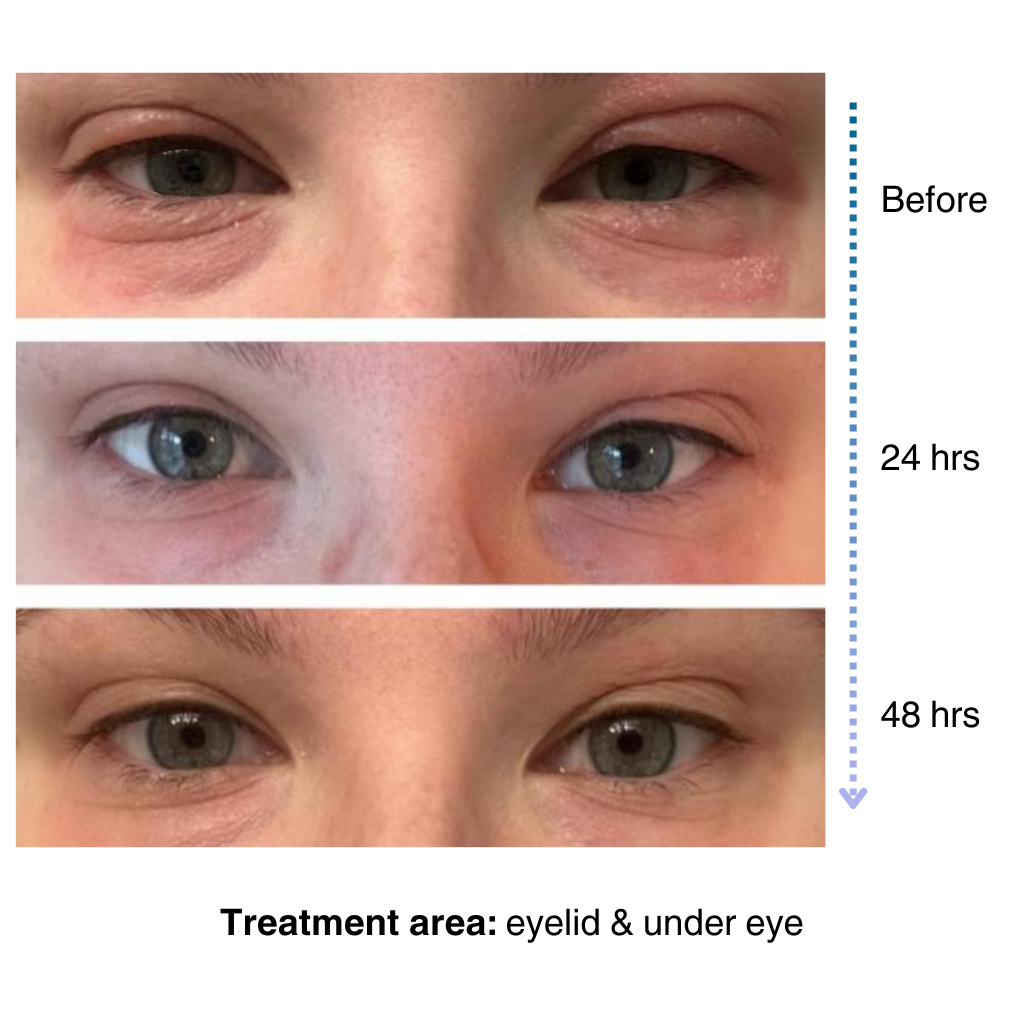
It’s easy to apply and isn’t chalky at all. I’ve been applying it multiple times a day… I’ve tried multiple new products to try and treat my eye eczema, and this is definitely the best I’ve tried so far.
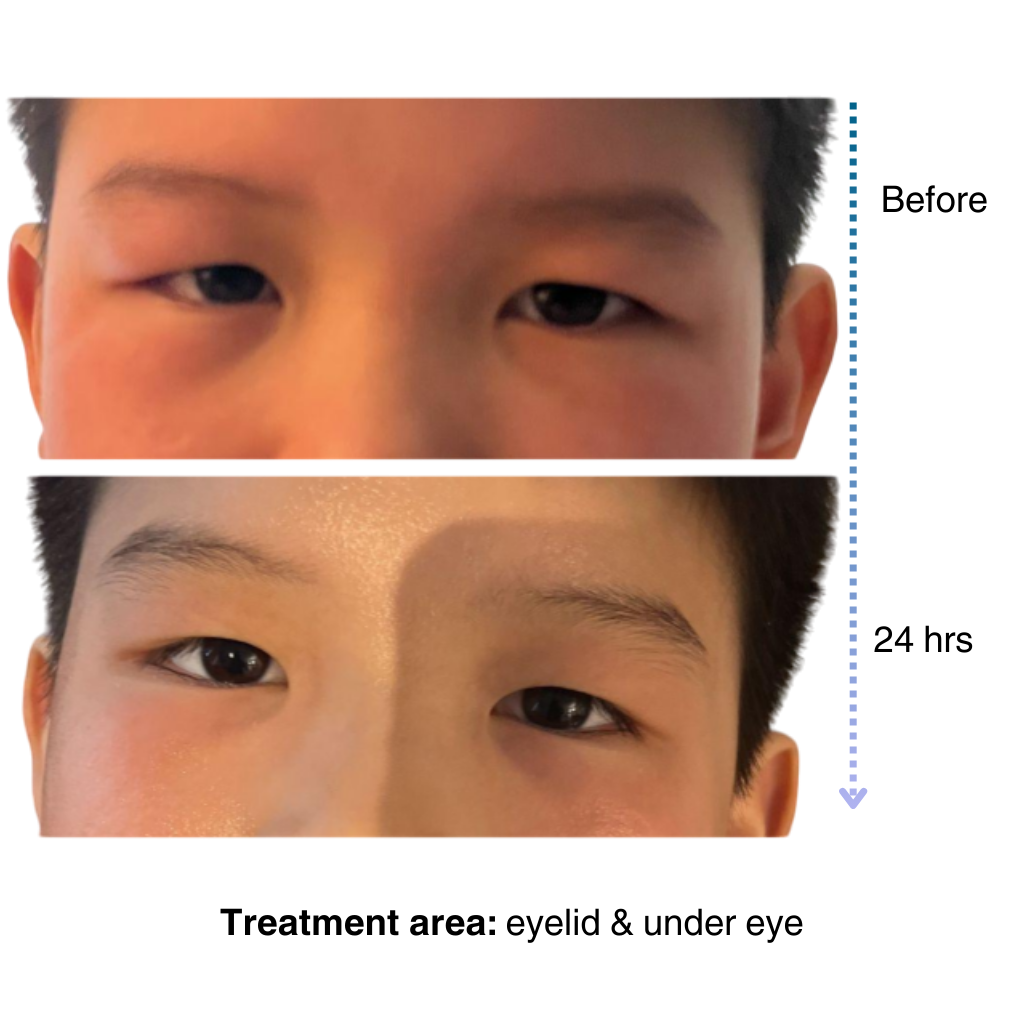
My 7-year old son has been dealing with eczema on his face for a long time, and it’s been so tough to find something that really works…..I’m amazed by the results! Within one day, the redness and rough patches on his face significantly improved…. he doesn’t mind using it at all because it doesn’t sting or feel greasy. – Lily

Like many of you, our eczema journey is personal. That’s why we’re committed to creating a space for the eczema community to share experiences, be empowered through evidence-based solutions, and learn practical tips for daily life.
– Sajjad, Founder & CEO of NellaDerm
